

July 5, 2022
BOBST oneBARRIER FibreCycle: A High Barrier Fibre-Based Solution
BOBST, working with partners including UPM and Michelman, has developed a high-barrier, recycle-ready, fibre-based solution named oneBARRIER FibreCycle.
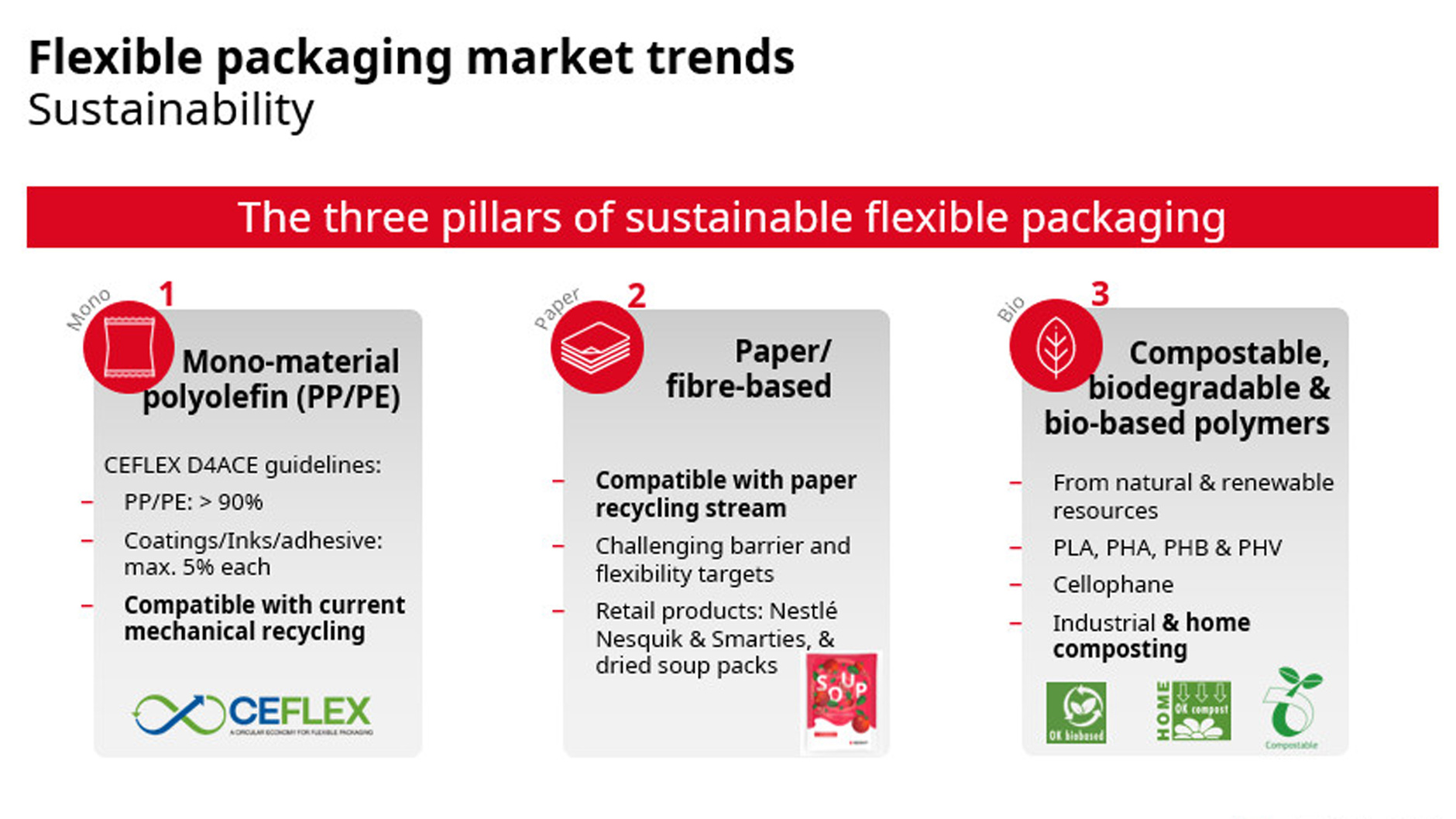
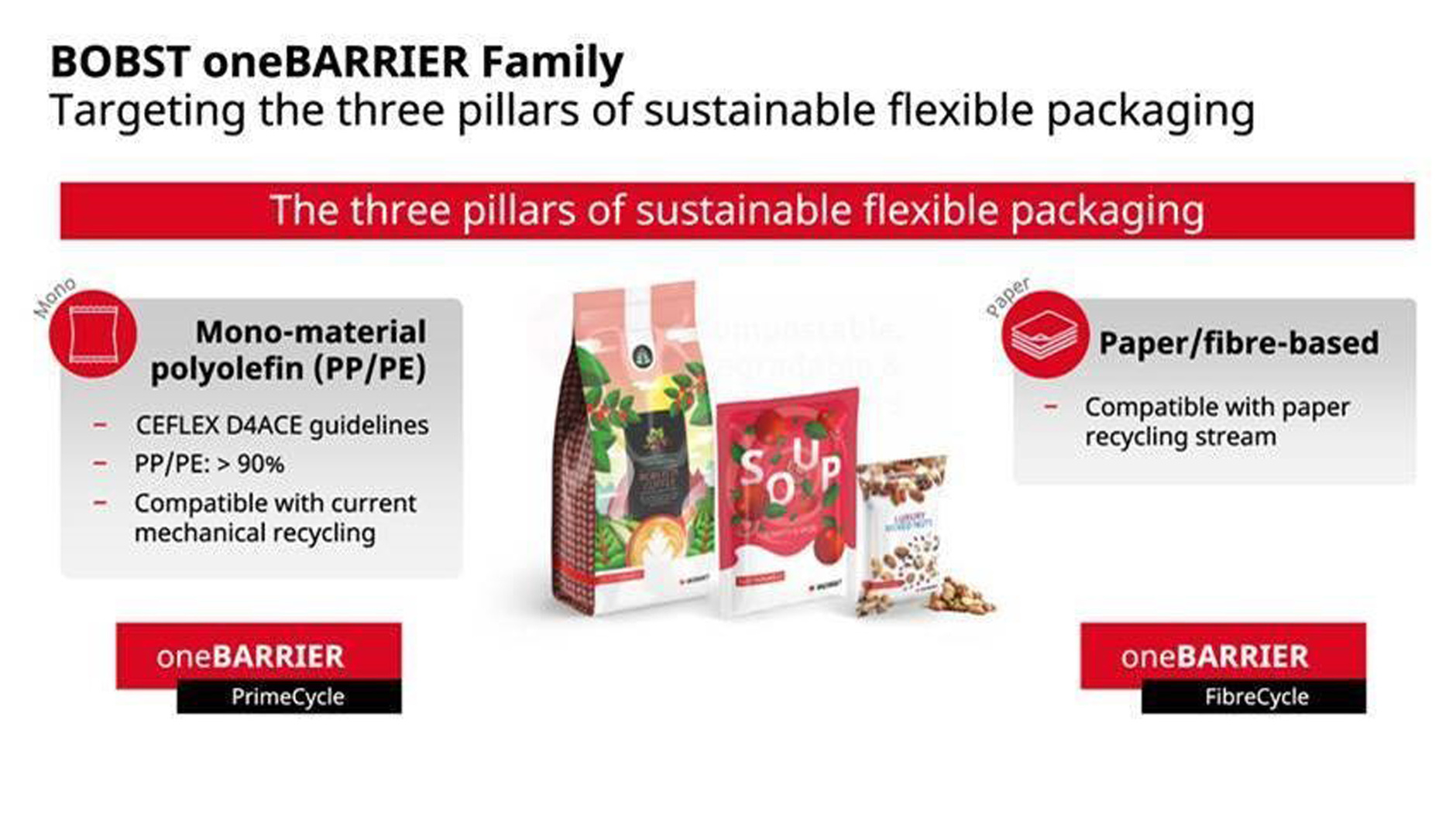
When looking at global market trends for sustainable flexible packaging, those trends can be grouped into three pillars of sustainability: mono-material polyolefins; compostable, biodegradable, and bio-based; and paper/fiber-based. This article focuses solely on the second pillar—paper/fibre-based—and how oneBARRIER FibreCycle was developed.
oneBARRIER family
BOBST, along with its partners, has created the oneBARRIER family of solutions, targeting all three pillars of sustainability. Last year, BOBST launched oneBARRIER PrimeCycle, an EVOH-free, top-coat-free solution for full-PE barrier and an alternative to metallized polyester film. Following a shift in industry demand toward more paper-based packaging options, BOBST launched oneBARRIER FibreCycle in June of this year—a paper-based packaging solution. BOBST is also actively working on the third pillar, exploring options such as the development of a home-compostable packaging option.
oneBARRIER FibreCycle creation: primer
To create high-barrier paper-based material, a thin primer layer is required to prepare the paper surface for metallization. Coating paper first meant overcoming its core challenges: it's hygroscopic and absorbs moisture readily, has high surface roughness, and offers poor barrier performance on its own.
From there, BOBST selected the right chemistry for barrier performance and adhesion, identified the coating method and drying profile needed to enhance the paper coating, and ensured careful web handling given the substrate's brittle nature.
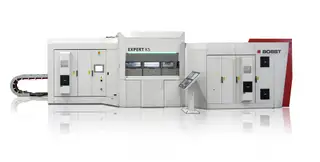
The oneBARRIER FibreCycle structure is shown in Figure 1. Creating it involves two coating phases: primer coating before metallization, and a heat-sealable top-coat afterward. Both phases were carried out at BOBST Italia on the pilot coating machine, while metallization took place at BOBST Manchester on an EXPERT K5.
Over the past three years, BOBST has run more than 300 paper coating trials—testing paper thicknesses from 32 to 100 gsm and chemistries including PVOH, PU, and acrylic—while optimizing coating weight for both the primer and top-coat layers. The result: deep, hard-won expertise in paper coating.
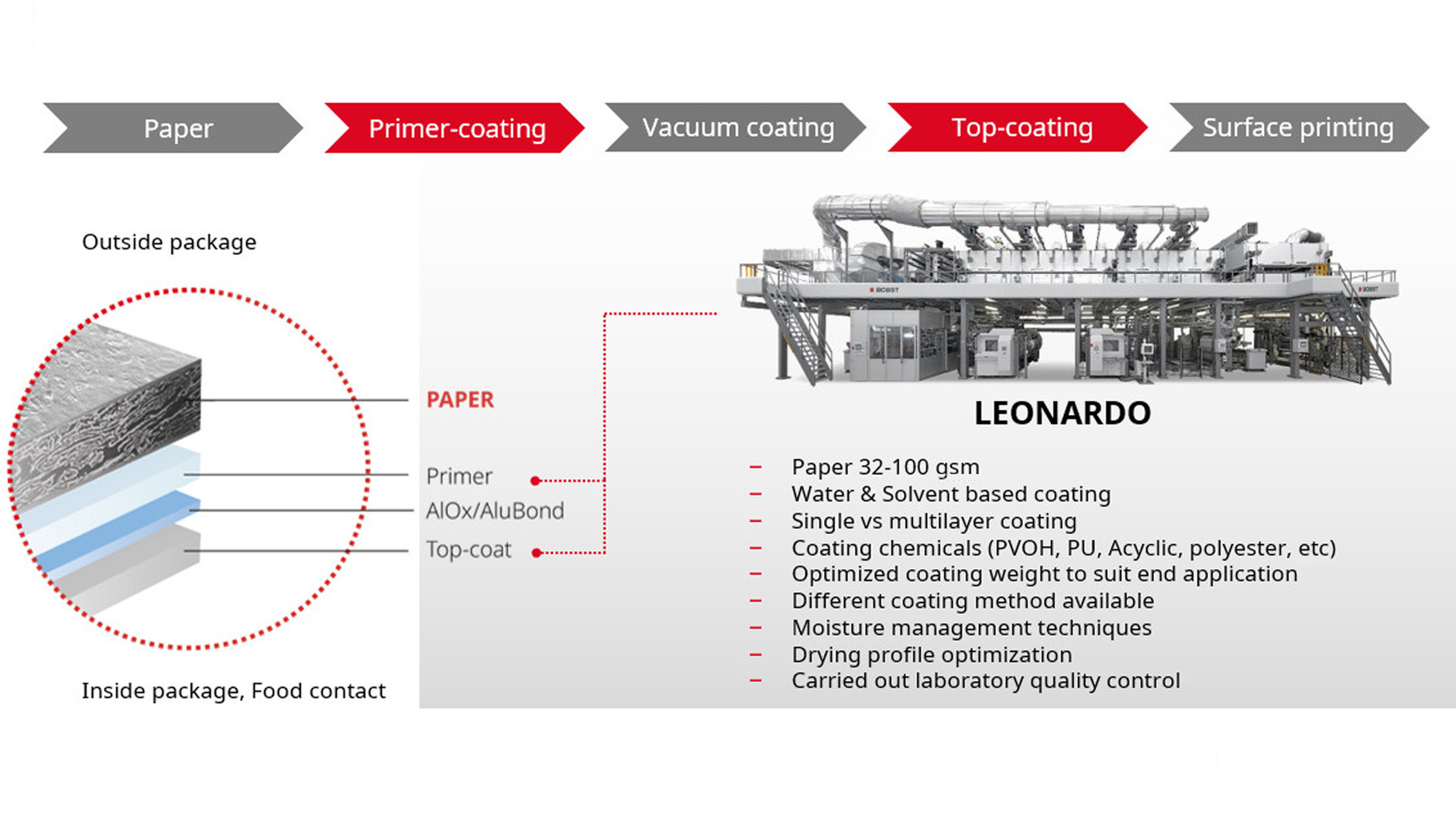
Figure 1
During development, SEM images were used to study the paper's morphology before and after primer coating (see Figure 2), with the goal of eliminating porosity.
On the left, the paper surface before coating shows the red-circled porosity and fibrils. The middle image shows the surface after Coating Method B—a single, thin polymer coating pass—where a few visible fibrils remain, indicating pinholes that can lead to poor barrier performance.
The image on the right shows the oneBARRIER coating configuration, with sufficient film formation to minimize surface roughness. The bottom SEM cross-section image shows a uniform coated layer that leads to a stable barrier, with a smooth primer layer and no pinholes.
Applying the correct coating weight and method is essential to covering surface fibrils: too little weight roughens the surface, so finding the right balance is critical.
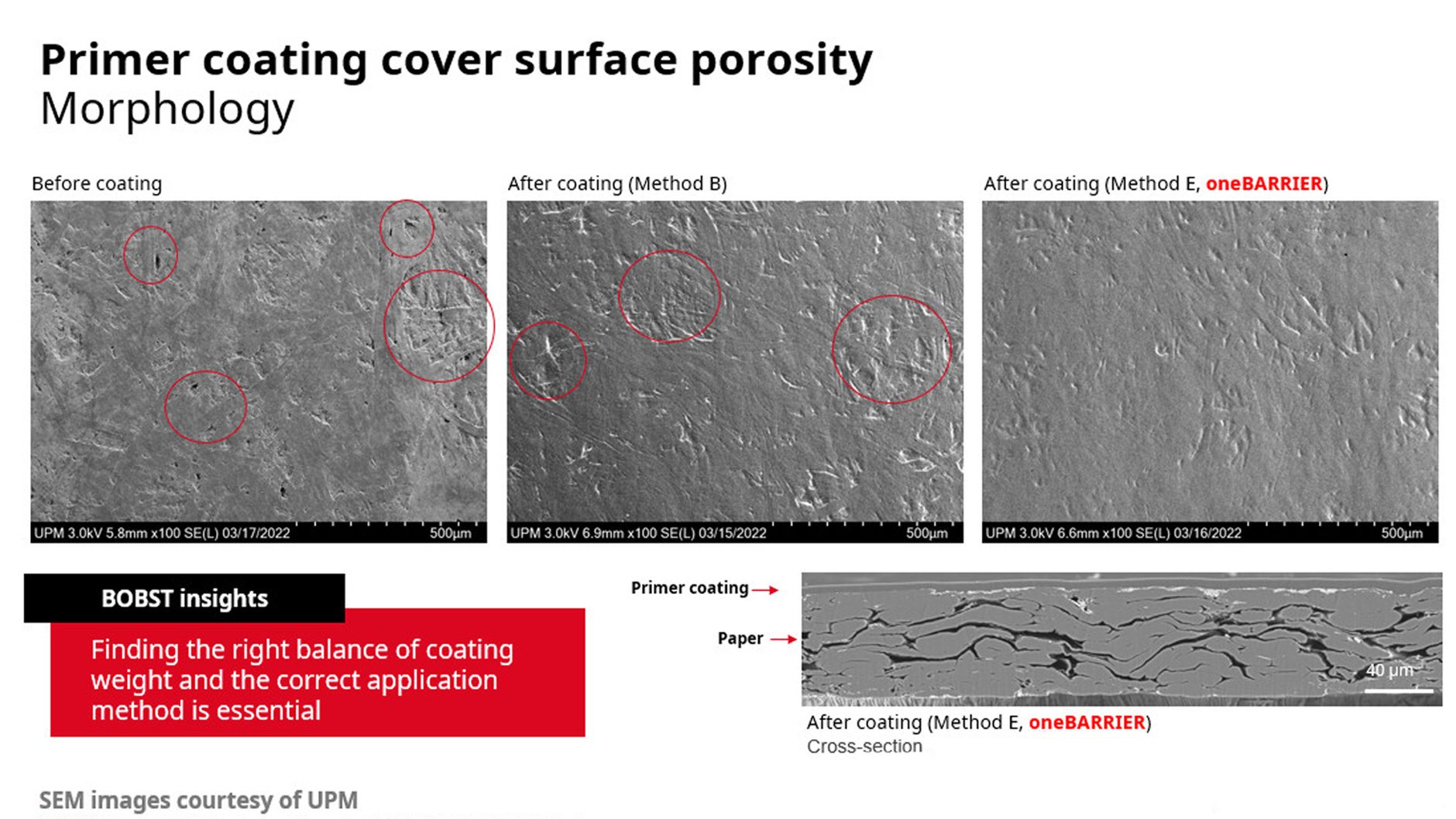
Figure 2
Figure 3 shows the barrier properties of paper using different primer coating methods, tested with a dye penetrant test. On the left, the non-coated paper sample shows red dye penetrating through the entire layer. Five coating methods were studied—A, B, C, D, and E—with dye penetrant results checked alongside OTR (oxygen transmission rate).
With Methods A and B, red dots on the reverse side indicate pinholes in the coated layer, meaning the required barrier levels can't be achieved. Method C has a similar coating weight to B but shows no pinholes, significantly improving the barrier. The oneBARRIER primer achieves no pinholes and an OTR of less than 0.1 cm³/(m²·d) immediately after application—by far the best-performing method.
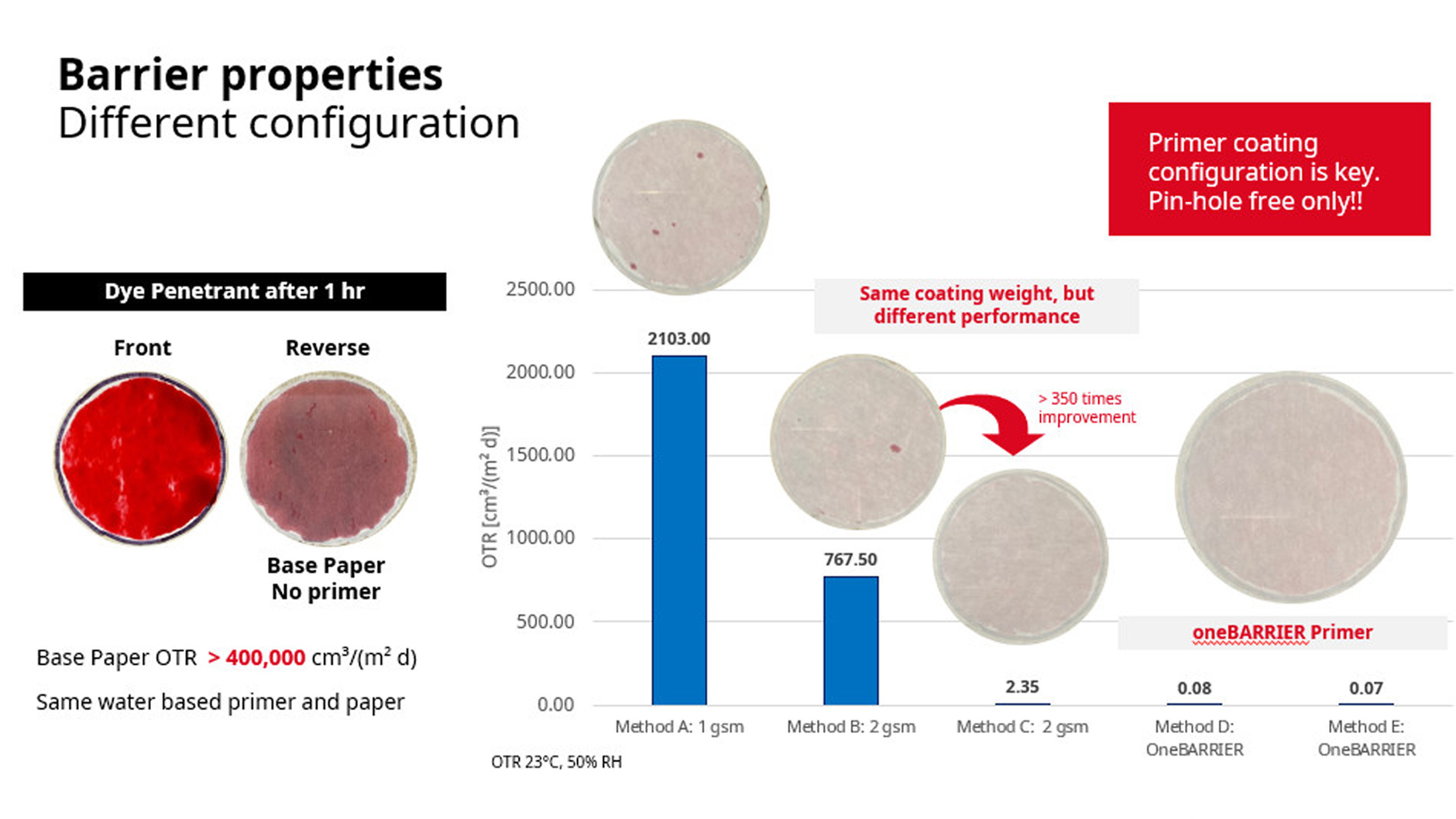
Figure 3
oneBARRIER FibreCycle creation: metallization
After the primer is applied, vacuum metallization is performed. As shown in Figure 4, this layer can be either opaque, produced using BOBST's AluBond process, or transparent, produced using its AlOx process, both performed on an EXPERT K5.
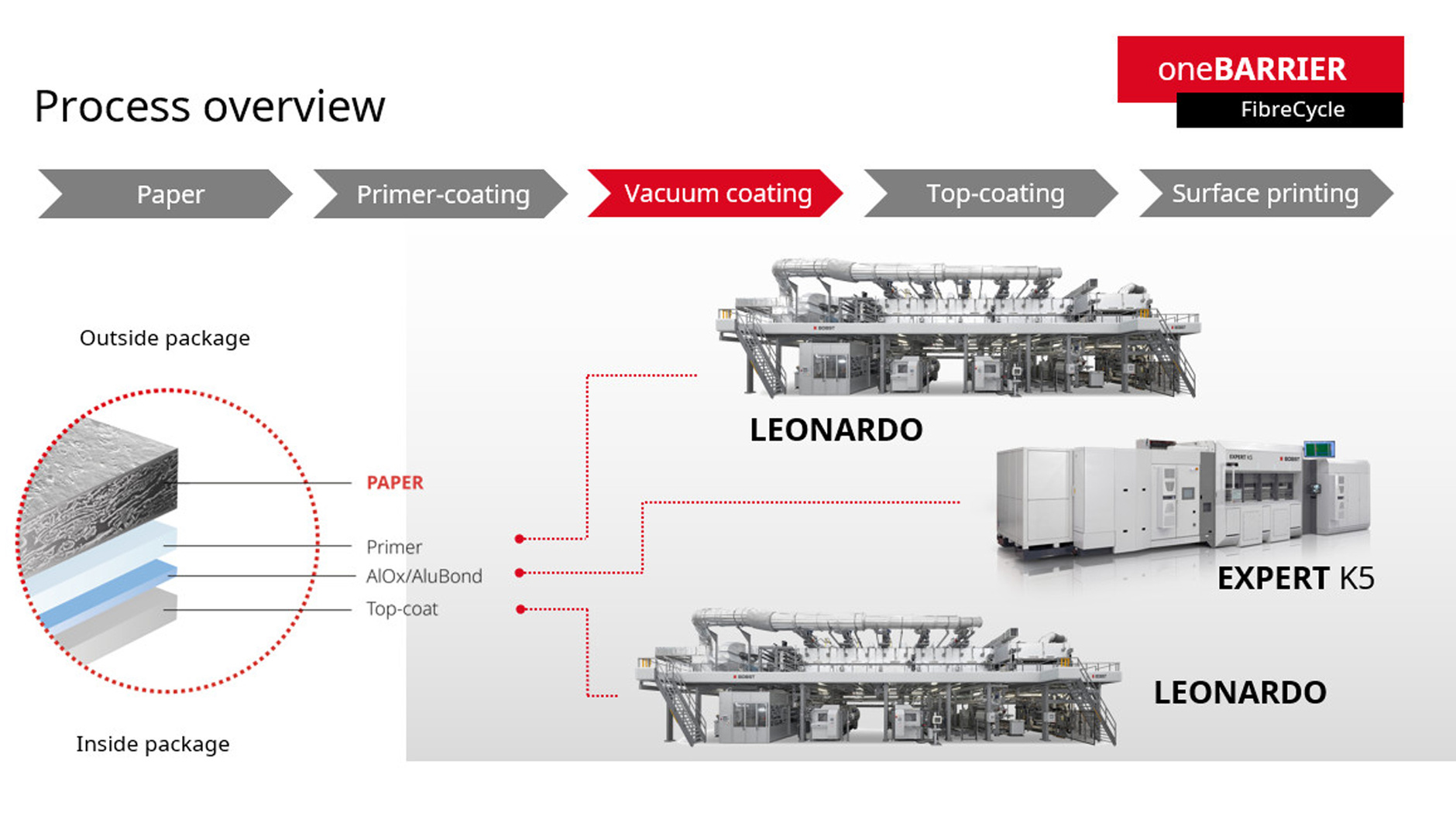
Figure 4
After metallization, the paper is tested again for pinholes using the same method described earlier in this article. Dye penetrant is applied to the metallized side, and the reverse side is then checked for dye leakage.
As shown in Figure 5, results are consistent before and after metallization, indicating that the pinholes originate in the primer layer—not the metallization. This makes sense given the scale involved: metallization operates in the nanometer range, while pinholes in the primer layer are in the micron range, far too large for the metallization to cover.
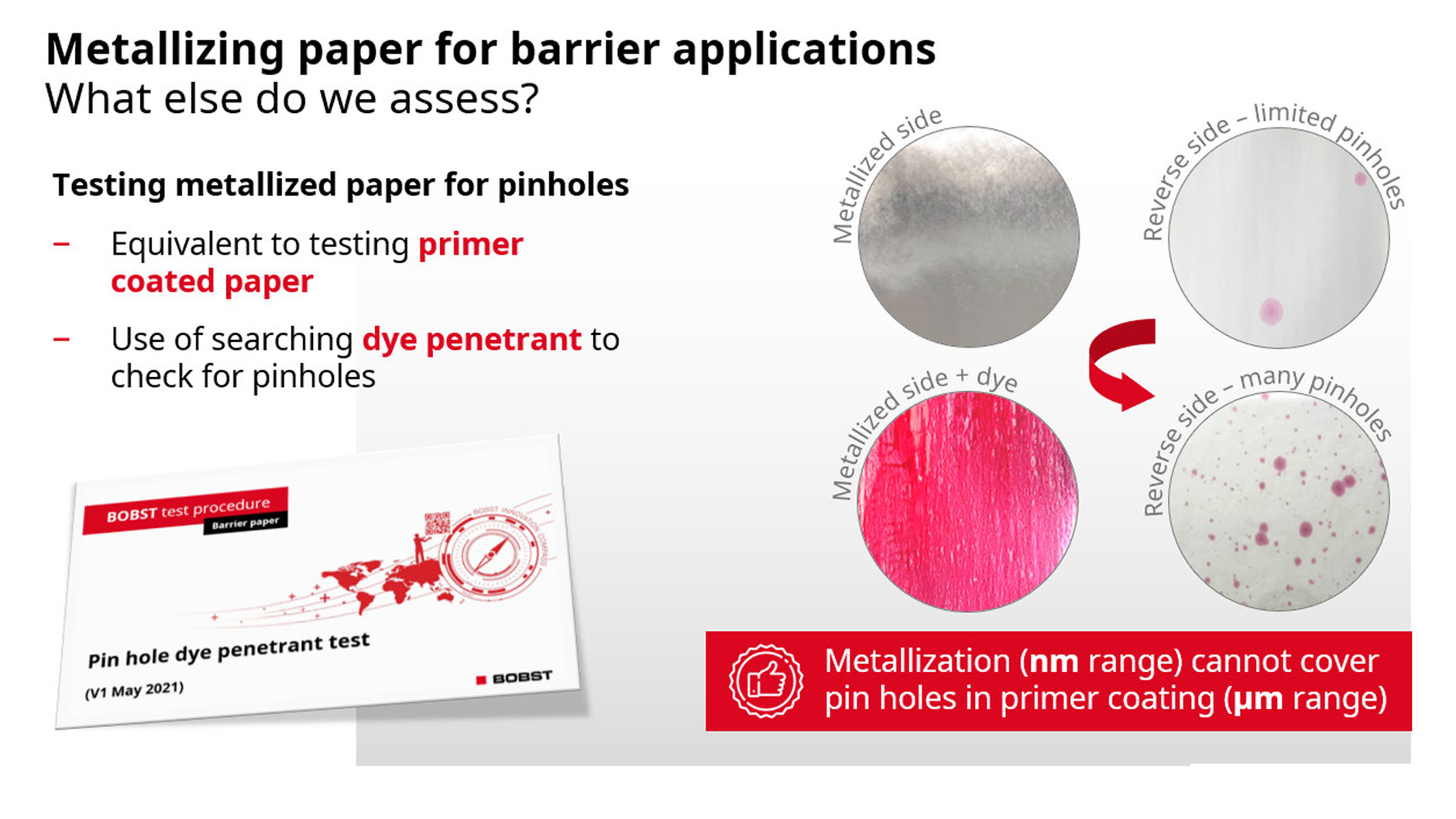
Figure 5
Durability tests were also conducted using a fold test, simulating packaging production such as a three-side-sealed pouch with a bottom fold. The test was run both before and after applying a heat-seal coating on top of the metallized layer.
Without heat seal, OTR varied greatly after folding, showing that folding can drastically impact oxygen barrier performance; WVTR—mainly associated with the metallization layer—was less affected. Once the heat seal is applied, both OTR and WVTR are maintained after folding, demonstrating that the heat-seal coating enhances the fold resistance of the metallized paper structure.
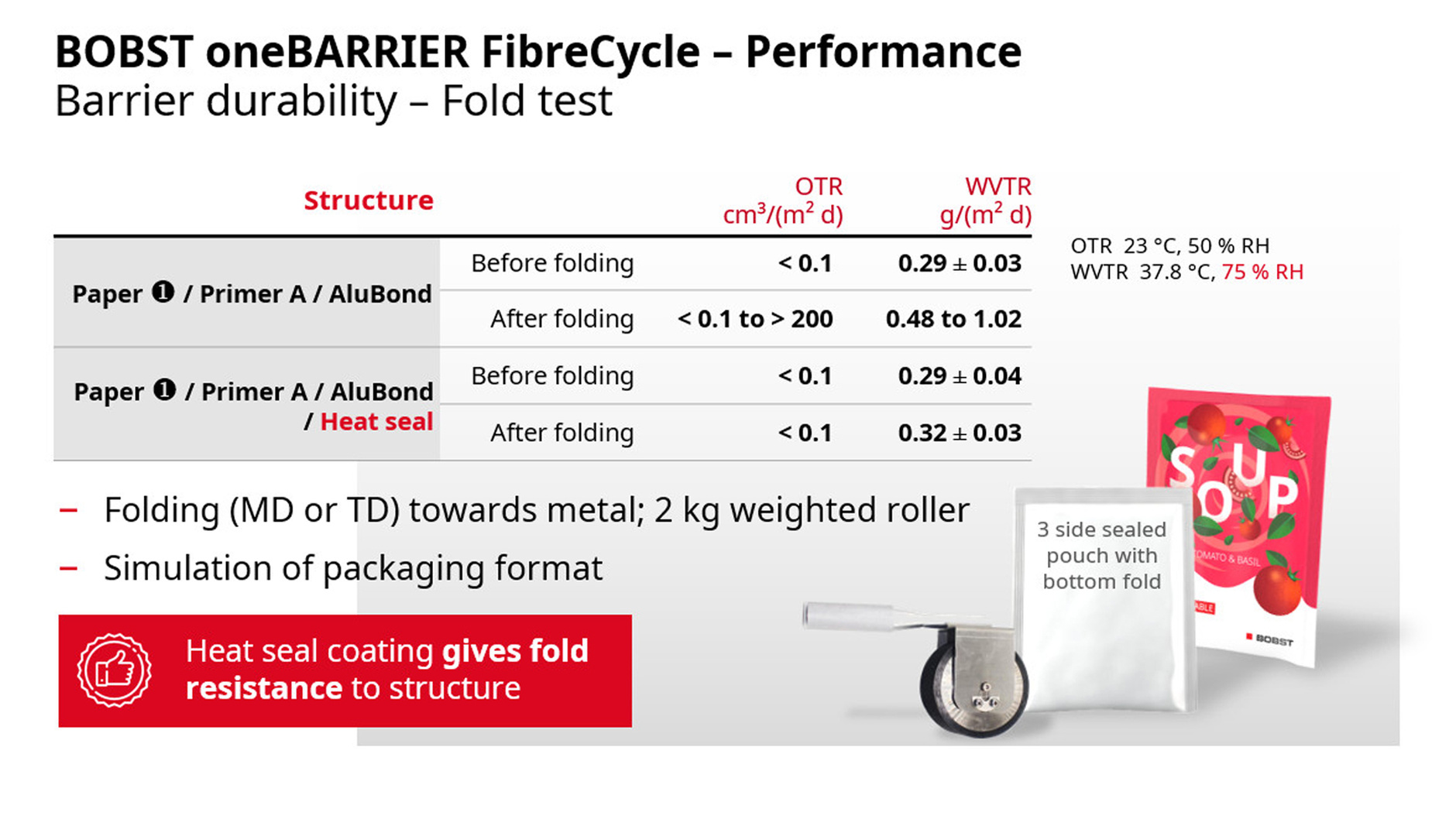
Figure 6
The oneBARRIER FibreCycle structure was also assessed for recyclability using the PTS method, evaluating two criteria: disintegrability and undisturbed sheet formation. Results showed the structure disintegrates easily, with no stickies or optical inhomogeneities found, confirming that the structure is recyclable.
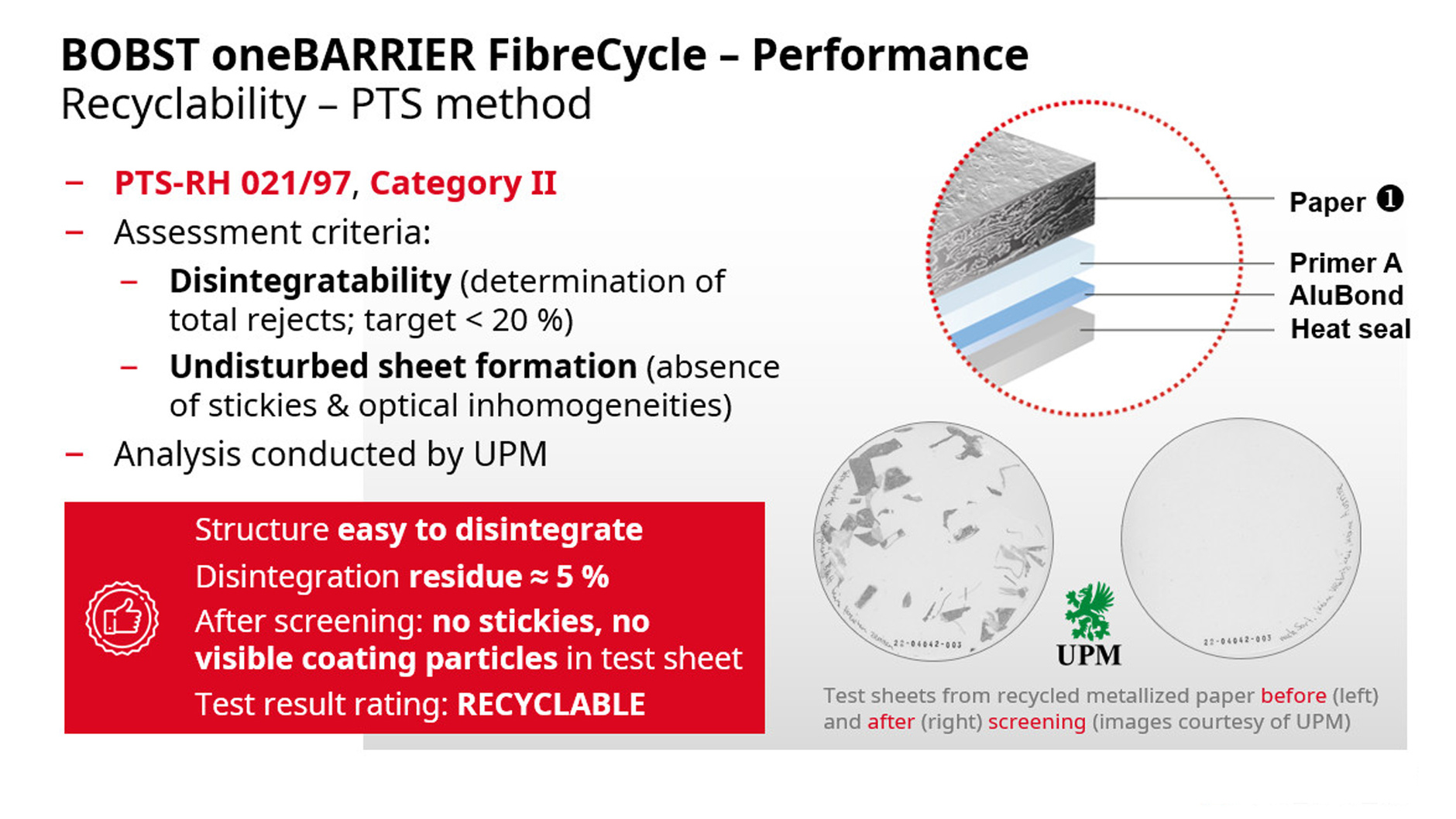
Figure 7
oneBARRIER FibreCycle for a mono-material, high-barrier paper alternative
oneBARRIER FibreCycle offers a mono-material, paper-based alternative to plastic-based flexible packaging and is recyclable. The solution combines wet dispersion coating and dry vacuum coating to deliver a high-performance packaging solution, achieving barrier performance of OTR < 1 cm³/(m²·d) and WVTR < 1 g/(m²·d).
oneBARRIER FibreCycle is available now; please contact us for more information.
Related products
EXPERT K5 Metallizer
High productivity metallizing