


How automation is enabling a new era of vacuum metallizing
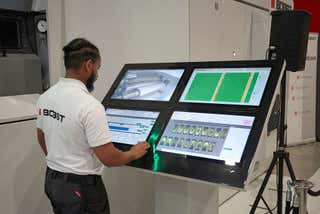
As the demands on converters and film producers become greater, machines must get smarter.
That’s the simple truth at the heart of today’s packaging industry. Flexible packaging converters and film producers, for example, face increasing manufacturing complexity: new sustainable and more heat-sensitive substrates, tighter regulations, growing barrier performance requirements, and a shrinking pool of experienced operators. In this environment, machine and process automation is becoming increasingly necessary to manage that complexity while maintaining productivity, quality and profitability.
Take vacuum metallizing for example, which has been an essential enabling technology for high-performance flexible packaging for decades. An extremely thin layer of aluminium is deposited onto a film such as PET, PP or increasingly PE-based substrates. That tiny amount of metal can dramatically improve the film's barrier – providing the necessary barrier protection against oxygen, moisture and light – without adding the weight and thickness associated with aluminium foil.
For certain products such as snacks, confectionery, coffee, and powdered foods, vacuum metallizing is essential to improve shelf life, product quality and food-waste reduction. But in the modern packaging environment, the way this essential component of flexible packaging is managed is changing.
The four trends defining a new era
Until now, vacuum metallizing has been a highly manual process. It has relied heavily on skilled operators to set up the film and process parameters, visually monitor aluminium evaporation, interpret coating quality and continually adjust the process accordingly.
But current trends in the flexible packaging industry are necessitating a move towards a new era of automated solutions.
1. The shortage of skilled metallizer operators
Across the wider packaging sector, 95% of companies report difficulties hiring skilled operators and technicians.[i]
As experienced operators approach retirement, converters and film producers face not only a shrinking talent pool but the loss of decades of technical knowledge and expertise. Experienced metallizer operators take years to develop – when one retires or leaves, a company can lose substantial knowledge and experience.
For converters and film producers, there is a need to reduce dependency on skilled operators, simplify production and help preserve critical process knowledge.
2. The implementation of sustainability regulations
The packaging industry is moving towards more recyclable and mono-material flexible packaging. The EU Packaging and Packaging Waste Regulation requires packaging to meet recyclability requirements from 2030, with recyclability performance grades and progressively stronger requirements thereafter.
This puts pressure on converters to move away from difficult-to-recycle multi-material structures, which creates an interesting challenge and opportunity for metallization. A very thin vacuum-metallized aluminium layer can play an important role in lightweight recyclable mono-material high-barrier packaging
The challenge for converters is that mono-materials can make the metallizing process less forgiving just as converters need greater consistency and lower waste – making manual process control increasingly challenging.
3. The increasing complexity of sustainable substrates
As the packaging industry moves towards more recyclable structures, converters and film producers are increasingly required to metallize thinner and more heat-sensitive substrates.
Materials such as BOPE, MDO-PE and other emerging sustainable films can be more challenging to process, requiring tighter control of the metallizing process to maintain consistent barrier performance while minimizing thermal damage and waste.
This creates additional complexity for operators, as even small variations in process conditions can affect coating quality, substrate stability and overall production efficiency. Maintaining consistent quality across these increasingly demanding materials strengthens the case for more precise, automated process control.
4. The move towards wider, higher-productivity metallizers
As metallizers become wider and more productive, the number of process variables an operator must manage increases. On a wide metallizer there can be up to 60 evaporators. Traditionally, operators visually inspect the aluminium pool on each boat and continually adjust power to maintain the correct evaporation rate. That means machine performance can depend significantly on the experience of the person running it.
This makes consistent manual control increasingly difficult and further strengthens the case for automated, closed-loop process control.
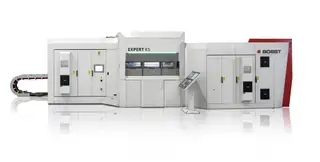
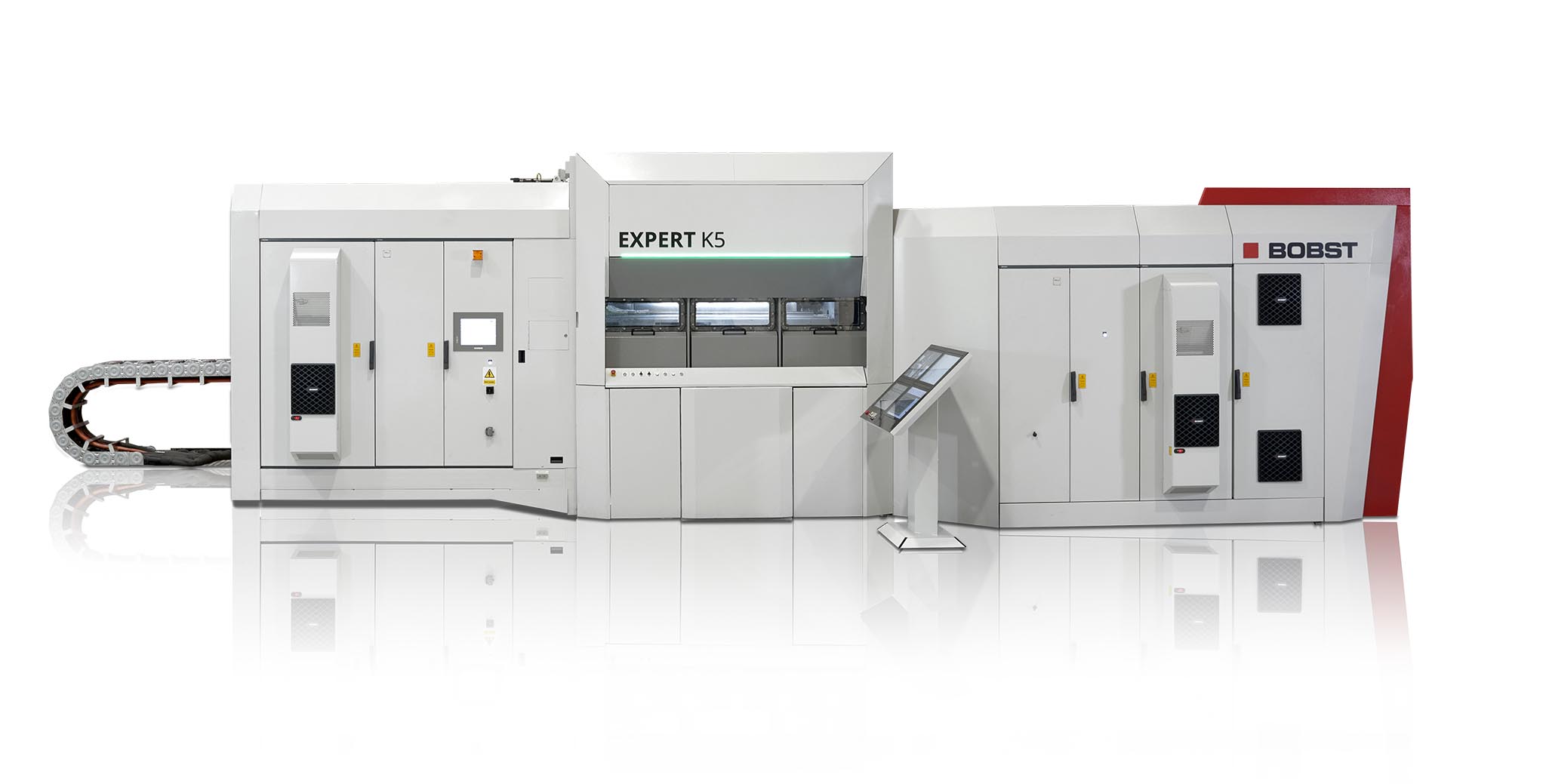 BOBST EXPERT K5
Embedding the process expertise into the metallizer
With flexible-packaging converters being asked to run more complex materials, to tighter specifications, with less waste and fewer skilled operators, the next stage is increasingly about automating the process.
The BOBST EXPERT K5 vacuum metallizer reflects this shift, featuring advanced automation and operating largely autonomously without the need for skilled operators. The metallizer directly addresses the four trends outlined above, while guaranteeing improved productivity, consistency and quality.
Central to the development is the AI-powered BOBST iMA (Intelligent Metallizing Assistant), which uses high-definition cameras to monitor the aluminium evaporation process and automatically controls the temperature of up to 60 evaporators simultaneously. Instead of operators continually observing aluminium pools and making individual adjustments, the process monitoring and control is handled by the machine itself.
This becomes increasingly important as converters and film producers move towards more sustainable, heat-sensitive substrates with higher barrier requirements, where precise process control is essential to maintaining quality and minimizing waste. The BOBST EXPERT K5 reduces optimization length from 12.5 km to 5 km per roll and cuts large defects by 50%, reducing the amount of substrate lost during production. Faster vacuum pumping reduces changeover time, while condition monitoring, process traceability and remote support through BOBST Connect are intended to reduce downtime and make troubleshooting less dependent on expertise being available at the machine. Lower evaporator temperatures and longer evaporator life also reduce energy and consumable costs.
The solution can also help converters respond to the changing material landscape, towards more recyclable structures. The EXPERT K5 is designed to process BOPE, MDO-PE, CPP, paper and heat-sensitive BOPP, as well as ultra-thin films such as 6-micron BOPP. This allows converters to manage more complex materials and production requirements without increasing their dependence on increasingly scarce specialist skills.
Towards a future of process intelligence
The evolution of vacuum metallizing reflects a much wider transition taking place across flexible packaging. For decades, packaging machinery has become progressively faster, wider and more mechanically sophisticated. The next step is to make the process itself more intelligent.
Instead of relying on an experienced operator to continuously observe the process and make corrections, automation can embed more of that process knowledge within the machine. Operators can then focus increasingly on supervision and optimization.
This matters because the pressures facing converters are likely to increase. Packaging structures will continue to evolve, sustainability requirements will become more demanding, production portfolios more fragmented and experienced technical skills harder to replace. The competitive advantage will therefore increasingly lie in the ability to manage this complexity without allowing it to translate into greater waste or cost.
Automation makes today’s metallizing process more productive. It also helps make tomorrow’s recyclable, mono-material barrier structures scalable.
The demands on converters and film producers have become greater. But the metallizer has become smarter.
[i] https://www.pmmi.org/news/finding-skilled-workers-remains-a-major-challenge-that-may-worsen
Latest news
Oct 07, 2026
BOBST Connect: Progress, Performance, and Potential

Oct 01, 2026
BOBST and leading partners bring the Algerian packaging industry together in Sétif
Jul 19, 2026
Colorman Ireland and BOBST: Advancing smart, connected packaging production together