


How Digital Transformation will change the flexible packaging & labels industry
In the first part of this series, I talked about where we were. Now we should address all those nice buzzwords like IoT, Industry 4.0 etc. I discussed how a digital printing press brings you closer to the digital reality, but it is not enough on its own and for sure not the only step needed to be part of the digital world.
“Digital” means that everything is based around 0 and 1. It means everything is managed and can be done to a lot size of 1. This lot size of 1 is easier in labels, because there are mainly surface printing applications. This is why digital printing successfully started in labels, photo printing, book printing and office desktop printing. It is much more difficult in the flexible packaging industry with the laminated structures with printing on the inner side of the laminate, special coatings to ensure the right surface friction for Brand Owners’ packing lines. So the flexible packaging industry is perhaps the first industry where the base business models and business approaches of the digital printing natives cannot be applied and will not work.
This is only one symptom that shows already that the digital transformation does not even work for printing “only” in all industries.
Let’s look at the broader picture:
Digital means that you add what I call the “Substrate Value Chain” and the “Data Value Chain”. You collect all relevant data, store them, process them and share the results with relevant stakeholders of the entire Fast Moving Consumer Goods (FMCG) value chain.
Each link in the supply chain has to manage and ensure data quality and how to enrich the process know -how with data – to make the experts capable of doing better decisions. “Better” in this context does not only mean “better” for their own business, but also “better” for the entire value chain – knowing that what is better for me is also better for the others and consequently “better” for all members of the same chain.
In a nutshell, this means for the converters: your machines need to start to talk to each other and your machine-collective – your plant – needs to start to talk to your suppliers and your customers.
Imagine you are a converter or label printer who knows that the retailer has run out of stock of a certain SKU. This could trigger the full supply chain and you would maybe know that the Brand Owner needs more material one or two weeks earlier than normal, the exact number of missing SKUs and the exact data, where the goods are needed. This gives you flexibility and increases your freedom – this flexibility increase goes backwards, step by step, until the very beginning of the supply chain, like paper mills, film producers, etc.
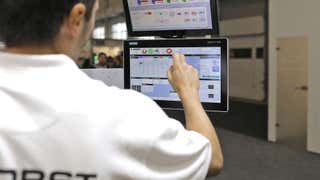
With BOBST Connect, we will provide the industry with the capability to enable the machines to talk with each other, collect and process relevant job and quality data.
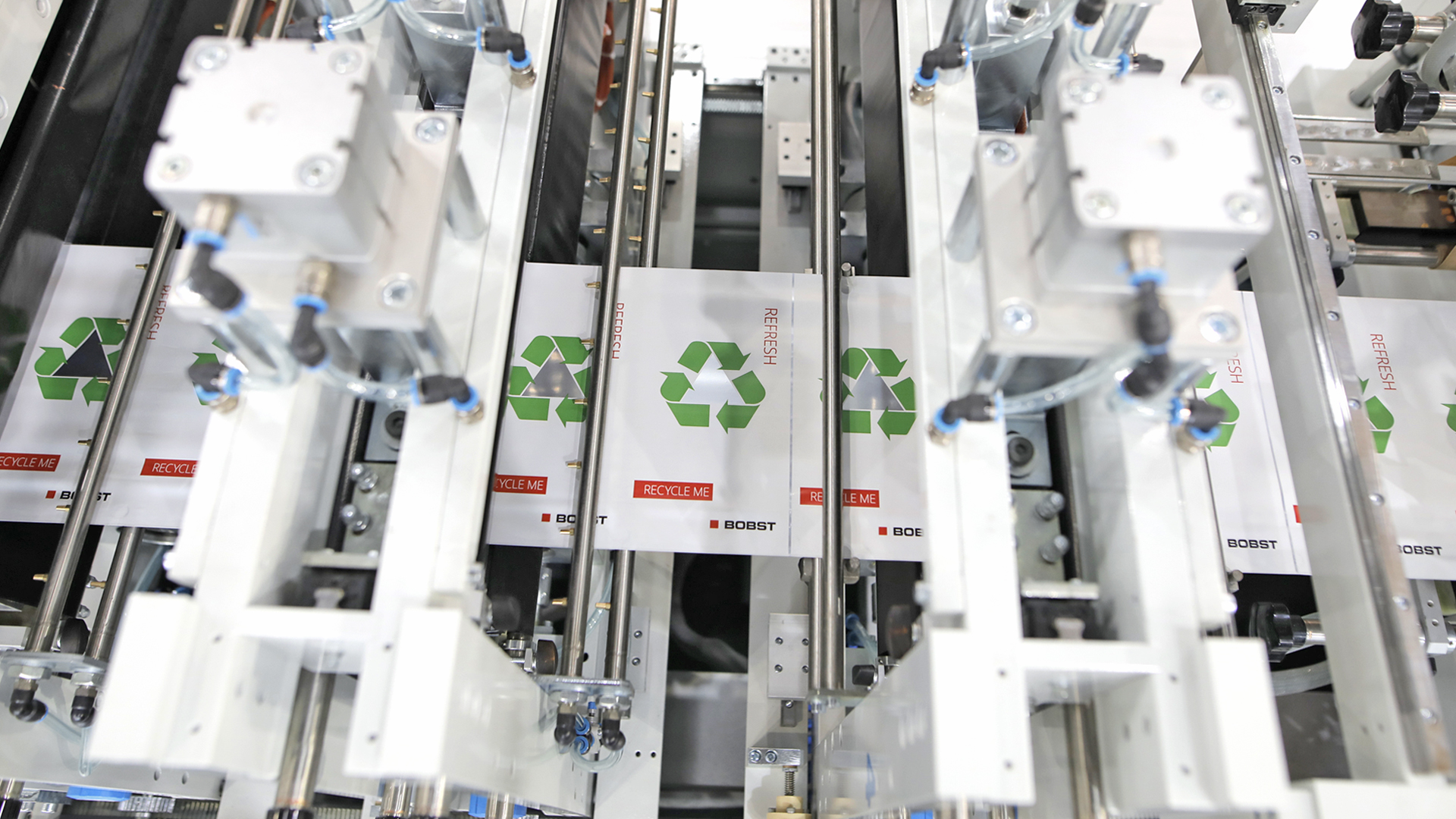
We are one of few global players in the packaging machine industry that can provide you with process- and application know-how in every single production step of your business. For the few technologies where we do not have in-house experts, like for film extrusion or pouch making, we have our partners. Just as we have shown at the K 2019 show with our mono-material hero samples, we are capable not only of industrialized real application solutions like ultra-high barrier stand-up pouches, we can also cover the full supply chain for flexible packaging.
Because of this expertise we are the right partner for the flexible packaging industry for all challenges in the future – no matter if new recyclable materials or digital transformation. You have to control the full value chain before you can collect and master useful data, which is the starting point of the digital transformation.
We should not forget labels, where BOBST is the only company in the industry with the application knowhow from label stock manufacturing, lacquering and lamination to inline and CI flexo or gravure printing, hybrid or digital printing.
No matter if you are in label printing or in flexible packaging, BOBST is a trusted partner providing the perfect solution of the physical substrate value chain and connecting it with the data value chain.
We provide you with solutions to automate the physical value chain wherever it makes sense - there are many examples on our product portfolio: MASTER M5, MASTER DM5, EXPERT CI with SmartGPS®, MASTER RS 6003 with TAPS, NOVA RS 5003 with TAPS, etc.
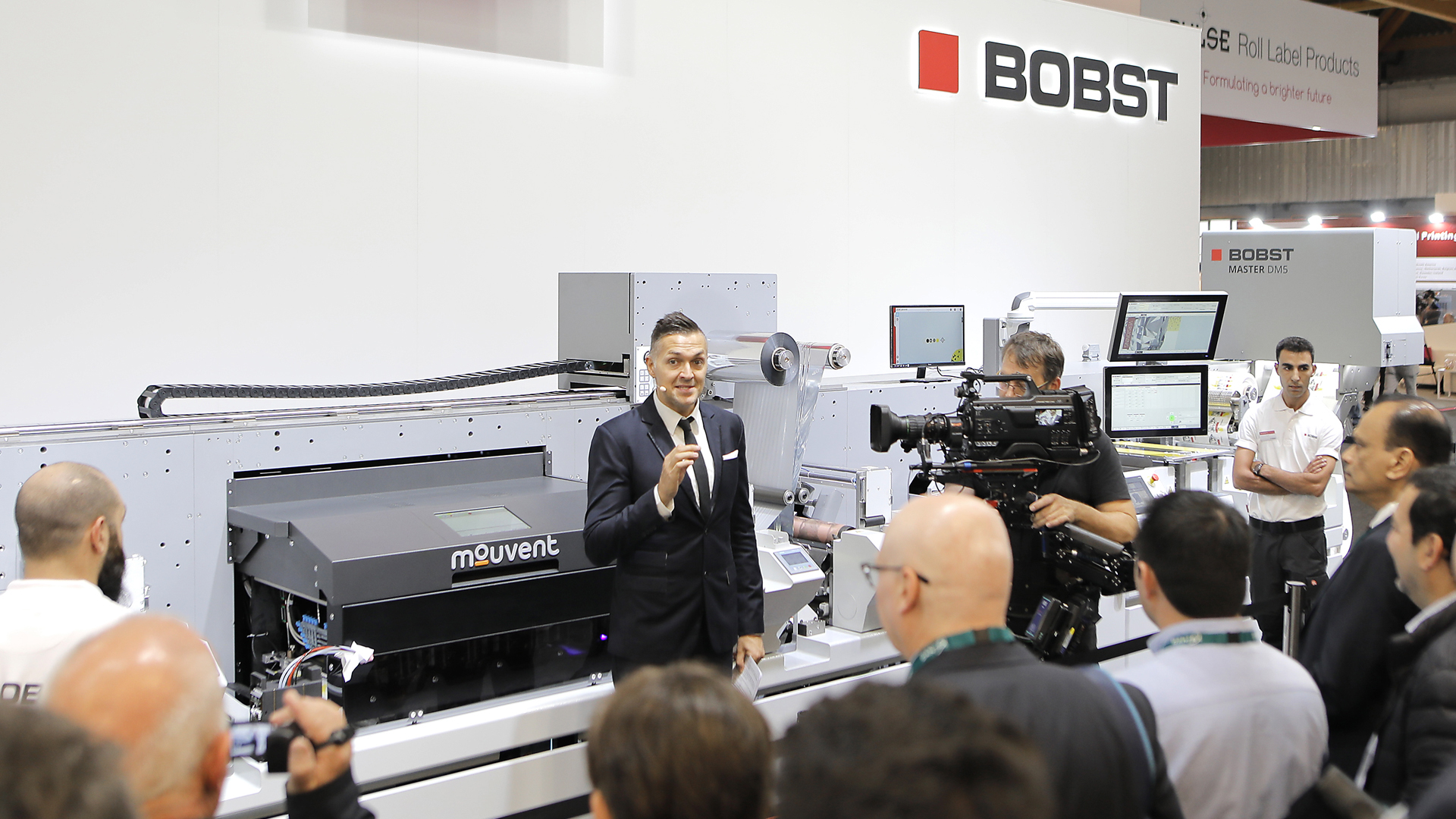
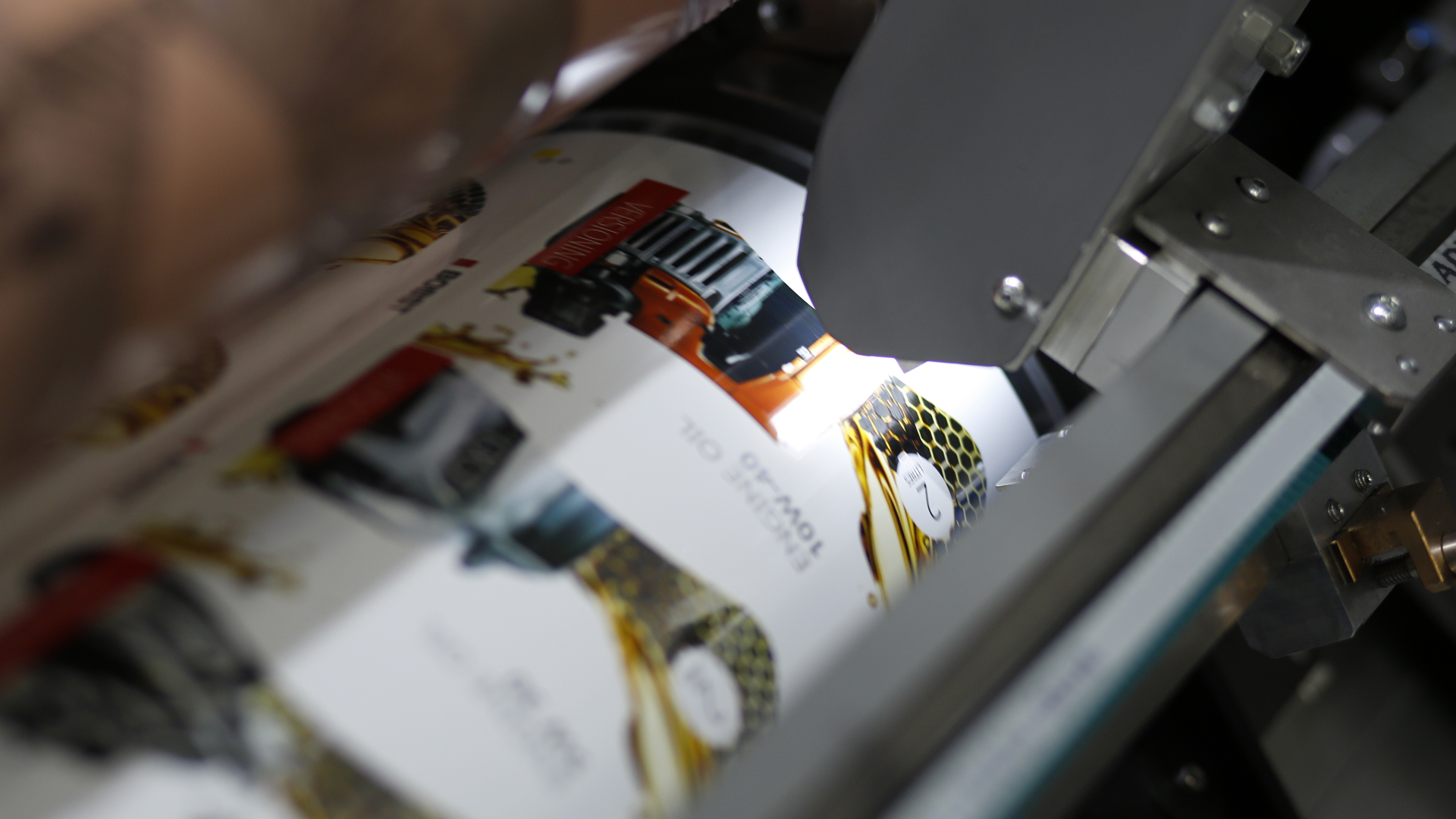
That is not all. We also master the data value chain. The first time we showed it was on our MASTER DM5 hybrid press for labels during the Labelexpo in Brussels in 2019. By integrating the BOBST iQ 500 Quality Inspection system into the MASTER DM5, we proved our leadership around closed loop printing quality control and moved one step ahead towards the famous “digital twin”.
This digital transformation needs data transparency and this does not only bring opportunities – there are obvious risks involved and it also raises questions. How to differentiate in a competitive world, where the customers and the suppliers and all the others that share the same supply chain have full data transparency? How do I protect my competitive advantage? My tricks and tweaks that I do in my company to be better than my competition? How do I avoid that my customer knows my margin and dictates my margin? How can I ensure data security for my job data, productivity data and customers data?
Those are relevant questions and the fear to be 100% replaceable and fully dependent on the willingness of the customer who dictates the price is pushing many to avoid this data transparency. But in reality it is happening already and “no-data-sharing” mentality did not avoid supplier comparisons or remove the threat of competition. Let’s be honest, what is the differentiator in the industry right now? Price, quality, lead time, innovation power and not to forget reputation!
Finally, it is the same song over and over again: productivity, agility (flexibility, short lead times, short time to market) and sustainability!
We will talk about those differentiators and find answers for those important questions in the next parts in the series!
Christian Zeller
Strategic Product Marketing Director
Business Unit Web-fed
Latest news
Oct 07, 2026
BOBST Connect: Progress, Performance, and Potential

Jul 19, 2026
Colorman Ireland and BOBST: Advancing smart, connected packaging production together
Jul 13, 2026
BOBST Becomes First Packaging Machinery Manufacturer to Achieve Carbon Literacy Platinum Award